

Gestalt therapy in Stockholm
A safe Space for Therapy
Are you going through a separation or personal crisis and looking for support? At some point, most of us realise that our usual ways of being are no longer serving us. We start to question our identity, our relationships, and the way we live our lives.
I offer therapy for individuals and couples, focusing on loneliness, identity, separation and the relationship patterns that influence your life.
You don’t need to come to me with a clear idea of what’s wrong. Nor do you need to know exactly what feels unsettled. In therapy, I will help you to discover the patterns that you carry with you through life and how these patterns influence your current way of living.
The better you understand yourself, the freer you will become, and the more able you will be to move through life on your own terms and relate to others with greater freedom.
For me, therapy is about more than appointments. It’s about the relationship we build.
If you would rather text your enquiry or speak with me on the phone as a first contact, email me your number and I will get back to you.
Couples therapy
I also offer couples therapy. Sometimes it can be difficult to find your way back to each other on your own. In couples therapy, you are given the opportunity to pause, listen to one another, and explore together what is happening between you.
Couples therapy 90 minutes

ABOUT ME – AUTHORISED GESTALT THERAPIST
A therapist who can stay with what is difficult
As a therapist, I do not shy away from what is difficult. I stay with you in the conversation, present and in contact, when things are complex or painful, and when what you are experiencing is difficult to put into words.
Experience
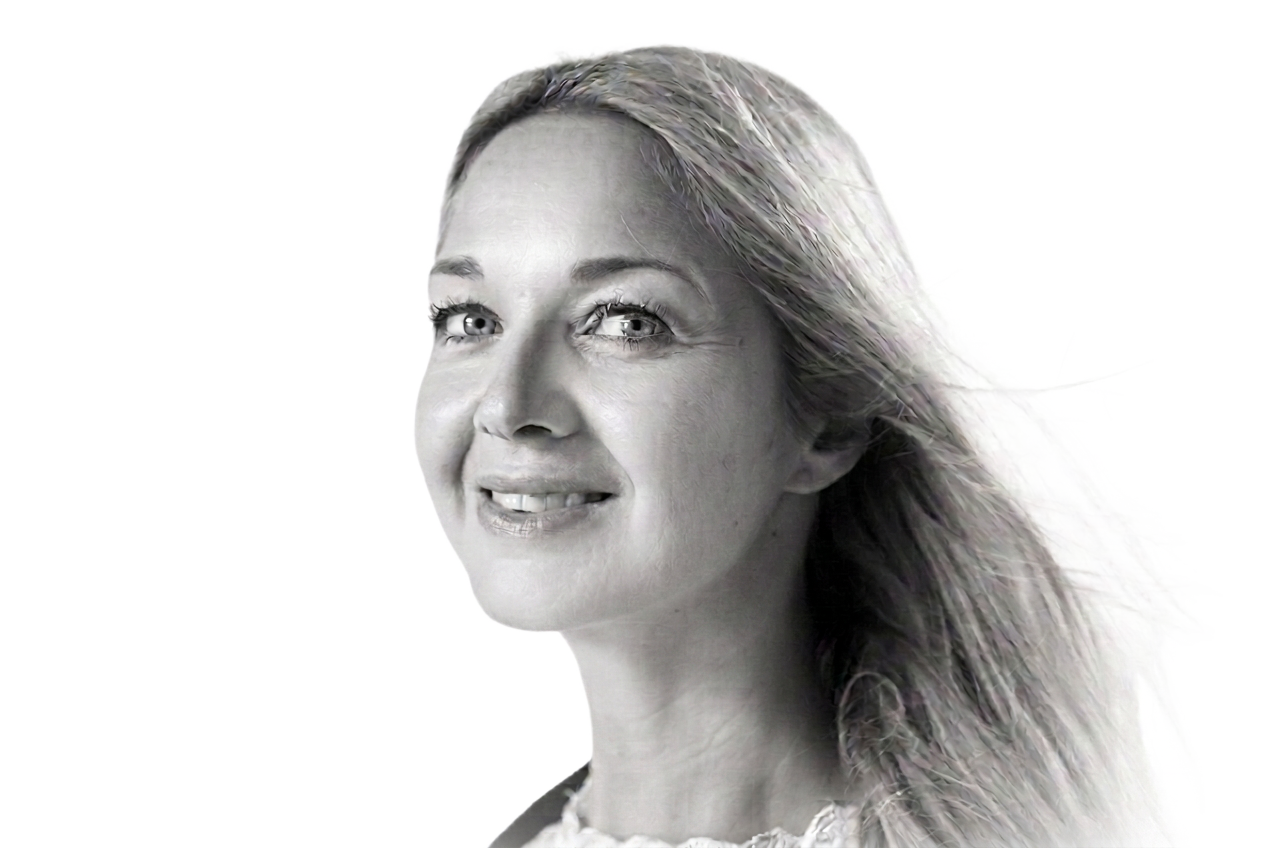
I have many years of experience working with people in the context of migration and crisis.
My academic background spans anthropology, behavioural and social sciences, and I hold two Master’s degrees. I have worked internationally, including with the EU and the United Nations, where I have met and supported people in complex and vulnerable situations, many carrying difficult and traumatic experiences.
Throughout my career, I have trained police officers, prosecutors, and judges in preventing and addressing human exploitation, and for many years, I have worked with questions of vulnerability, power, and people’s ability to shape their own lives. A common thread throughout this work has been empowerment – supporting people in reconnecting with their own strength, sense of agency, and capacity to influence the direction of their lives. I bring this perspective with me into my work as a therapist.
Another layer of understanding
My background as an anthropologist adds another dimension to my understanding of people.
Anthropology has taught me to understand the individual within their wider context – our relationships, our histories, our culture, and the world we live in. As a Gestalt therapist, I bring this understanding into the therapy room. We are never simply our thoughts or our feelings; we are continually shaped by, and respond to, the people and the world around us.
In the therapy room
I strive to be skilled in psychological theory and therapeutic methods, but I place even greater importance on how I meet each person I work with.
For me, presence, authenticity and respect are the foundation of a safe and meaningful therapeutic relationship. I meet you and your experiences with curiosity and openness, rather than with ready-made interpretations or diagnoses.

GESTALT THERAPY IN STOCKHOLM
Healing after psychological and emotional abuse
Emotional abuse in an intimate relationship may leave no visible scars, yet its impact can run deep. Over time, it can erode your sense of self-worth, create anxiety, and lead to powerful trauma bonds. After leaving a relationship that held both deep love and passion, as well as manipulation, ridicule and devaluation it can be hard to trust your own experience and perception of what happened.
This gradual erosion of your sense of self is also part of what can make emotional abuse so difficult to recognise. Power and control rarely appear all at once. Instead, they tend to enter the relationship slowly, intertwined with love, closeness, and reassurance. What hurts becomes mixed with what feels safe and loving, and over time, the boundaries of what you accept may gradually shift.
In therapy, we can start to make sense of your experiences, exploring how they may still be affecting you today. Validation is an important part of this process. When your feelings, perceptions, and experiences are understood and taken seriously, you gradually begin to trust yourself again. Setting new boundaries enables you to form relationships with others while staying true to yourself.
Healing is not just about leaving the past behind. It can be an opportunity to reclaim your memories, your sense of reality and your emotional well-being — a way of finding your way back to yourself and, eventually, towards relationships in which you can experience both safety and freedom.
The more you understand yourself, the freer you become: freer to trust your feelings, freer to honour your needs, and freer to be yourself in relationships with others.
Long-Term Post-Separation Coercive Control, Post-Separation Abuse, and Economic Abuse
If you have children with a person who exercises coercive control through manipulation and psychological abuse, leaving the relationship does not necessarily mean that the relationship ends in the ordinary sense. The person may have left your home, but the relationship does not disappear—it changes form. Shared children require ongoing contact, joint decision-making, and continuing financial ties, creating new contexts in which coercive control and post-separation abuse can continue.
Economic abuse can be part of this pattern. On the surface, the financial arrangement may appear equal: you share expenses, responsibilities, and resources. In practice, however, the distribution may look very different. One person may systematically secure the benefits for themselves while the other bears a disproportionate and very real share of the costs and consequences. This is also part of what can make economic abuse difficult to explain to people on the outside.
In therapy, I can help you recognize and make sense of the pattern you are experiencing. Step by step, you can begin to reclaim the agency and autonomy that prolonged coercive control and economic abuse may have constrained.
Training & experience
Therapy Training & Competencies
2026
Authorised and diplomated gestalt therapist
I work with adults and young adults in private practice. Focus on loneliness, identity, relationships, anxiety, self-criticism...separations, inner emptiness and lack of meaning, and therapy after psychological and emotional abuse. Areas of particular expertise: I have in-depth knowledge and clinical experience in supporting clients who are living with the effects of narcissistic abuse in intimate relationships, including prolonged coercive control, post-separation abuse, and economic abuse.
2020–2026
Gestalt Therapist Programme, Gestaltakademin i Skandinavien
Five-year programme (foundation course included) including personal therapy, supervision and clinical work. EAGT (The European Association for Gestalt Therapy) and EAP (European Association for Psychotherapy).
Membership


Gestalt therapy
What is Gestalt Therapy?
Gestalt therapy is not only about understanding ourselves intellectually. It is just as much about becoming aware of what you are actually feeling – what you avoid, hold back, or perhaps have not yet found the words for.
You may have learned to adapt, to achieve, to hold everything together, to please others, or to put other people’s needs before your own. Strategies that once helped you cope can, over time, become the very things that keep you from living the life you want.
At the heart of Gestalt therapy is the relationship between therapist and client, and what emerges in the contact between us. Attention is given not only to what you say, but also to what you experience in the moment – including emotions, physical sensations and responses in the body.
As you come into deeper contact with painful experiences or memories, we can gently explore new perspectives and ways of responding, at a pace that does not overwhelm you. The therapeutic relationship is grounded in authenticity, presence and mutuality. By staying close to your lived experience, rather than interpreting it for you, therapy can become a safe space for greater awareness, new possibilities and change.
Gestalt therapy can be helpful if you are experiencing:
- a sense of having lost touch with yourself
- difficulties in relationships or following a separation
- fear of rejection
- stress, pressure to perform, or a feeling of not being enough
- a sense of not belonging, loneliness, or inner emptiness
- life crises or existential anxiety
- difficulties in relationships or in expressing and understanding your emotions
- a longing for personal growth and greater self-awareness
- low mood, worry, or anxiety
© 2026 Sofia Tatsis. All text is copyrighted and may not be copied or republished without permission.
How it works
How Gestalt Therapy works
I meet you where you are
In our first session, we map out what you would like help with. We begin with what is here right now: in the body, in the feeling, in the room. No rush — we have time. I meet you where you are.
Phase II: Safety and Guidance
Once we have a clearer understanding of where you are and what you need, we begin to find a way forward and identify what you would like to work with in therapy. This requires a relationship between therapist and client that already feels safe enough. That sense of safety allows you to take risks, explore new ways of being and move beyond familiar patterns. At this stage, the therapist...can take a more active approach and offer clearer guidance.
Phase III: Change – Building Inner Support and Resilience
New ways of being, choosing and handling life emerge, step by step. Together we build your self-support and resilience.
FEES – AUTHORISED GESTALT THERAPIST
Individual therapy
Private individual 60 minutes 1000 SEK (incl. VAT)
If you are paying through your company: 60 minutes 1000 SEK (excl. VAT)
Couples therapy
Private individuals 90 minutes 1600 SEK (incl. VAT)
I offer a reduced fee for students or those who have difficulty paying the full fee — please ask!
My practice
Where to find me
My practice is located in the heart of Södermalm, just a few steps from Mariatorget in Stockholm.
Address: Maria Prästgårdsgata 17, Stockholm.
I also offer online sessions.
Common questions
Where is the practice located?
My practice is located in the heart of Södermalm, just a few steps from Mariatorget in Stockholm. Address: Maria Prästgårdsgatan 17, Stockholm.
Can I have therapy online?
I also offer online sessions via Zoom or Teams.
How much do individual and couples therapy cost?
Private individual: 60 minutes 1000 SEK (incl. VAT). If you are paying through your company: 60 minutes 1000 SEK (excl. VAT). Couples therapy for private individuals: 90 minutes 1600 SEK (incl. VAT).
Is a reduced fee available?
I offer a reduced fee for students or those who have difficulty paying the full fee — please ask!
What happens in the first session?
In our first session, we map out what you would like help with. We begin with what is here right now: in the body, in the feeling, in the room. No rush — we have time. I meet you where you are.
How do I book an initial session?
Write to me directly: sofiatatsis@gmail.com. If you would rather text your enquiry or speak with me on the phone as a first contact, email me your number and I will get back to you.
Contact
If you would rather text your enquiry or speak with me on the phone as a first contact, email me your number and I will get back to you.
Maria Prästgårdsgatan 17, Stockholm · Zoom or Teams